
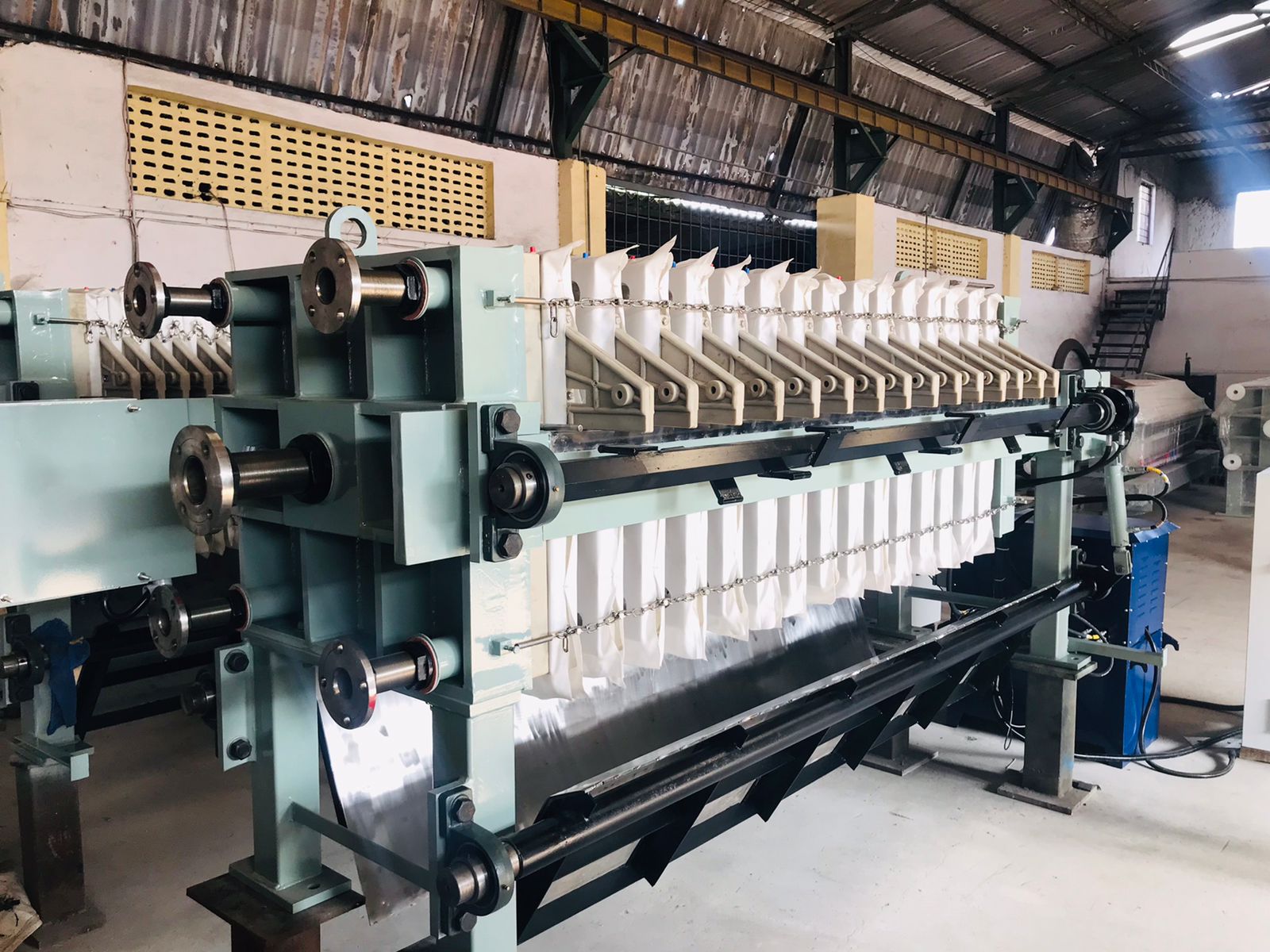
What is a Filter Press? Complete Guide to Working, Types, Applications & Benefits
A filter press is an industrial filtration system used to separate solids from liquids in a slurry. It works by pumping the slurry under pressure into a series of filter chambers lined with filter cloth. The liquid passes through the cloth and exits as filtrate, while the solid particles remain inside the chambers and gradually form a solid mass known as a filter cake.
Filter presses are widely used in wastewater treatment, chemical processing, pharmaceuticals, mining, ceramics, food processing, pigments, dyes, textiles, metal processing and many other industries where efficient solid-liquid separation is required.
If you are wondering what is a filter press, how does a filter press work, what are its main components, and which type is suitable for your application, this guide explains the entire process in simple terms.
What is a Filter Press?
A filter press is a pressure-driven solid-liquid separation machine. Its primary purpose is to remove suspended solids from a liquid mixture and produce two separate outputs:
- Filter cake: The retained solid material.
- Filtrate: The liquid that passes through the filtration media.
A typical filter press consists of multiple filter plates arranged together in a frame. Filter cloth is installed over these plates to act as the filtration medium.
During operation, slurry is pumped into the chambers created between the plates. Pressure forces the liquid portion through the filter cloth while solid particles are retained. As filtration continues, these solids accumulate and form filter cakes inside the chambers.
Once the filtration cycle is complete, the press is opened and the cakes are discharged.
This relatively straightforward principle makes the filter press one of the most established and versatile technologies for industrial dewatering and filtration.
How Does a Filter Press Work?
Understanding how a filter press works becomes easier when the process is divided into stages.
1. Closing the Filter Press
Before filtration begins, the filter plates are positioned together and compressed using the closing mechanism.
Depending on the design, the closing system may be manual, mechanical or hydraulic.
The plates must remain securely closed because slurry will be pumped into the filter chambers under pressure.
2. Feeding the Slurry
Once the plate pack is closed, a feed pump transfers slurry into the filter press.
The slurry travels through the feed passage and enters the chambers between the filter plates.
Slurry may contain wastewater sludge, chemicals, minerals, pigments, ceramic material, metal-processing residue or other suspended solids depending on the industrial application.
3. Filtration Begins
As pressure builds inside the chambers, liquid is forced through the filter cloth.
The cloth allows the liquid to pass while retaining larger solid particles.
The separated liquid travels through drainage passages in the plates and exits the filter press as filtrate.
4. Filter Cake Formation
The retained solids gradually accumulate on the surface of the filter cloth.
As more slurry enters the chambers, the layer of solids becomes thicker. Eventually, the chamber fills with compressed solid material.
This material is called the filter cake.
The characteristics of the cake depend on several factors, including:
- Type of slurry
- Particle size
- Feed pressure
- Filtration time
- Filter cloth
- Plate design
- Solid concentration
- Operating conditions
The objective is generally to obtain efficient liquid recovery while achieving the desired cake moisture level.
5. End of the Filtration Cycle
When the chambers are full or the desired filtration condition has been achieved, slurry feeding stops.
Depending on the filter press and process requirements, additional operations may then be performed, such as cake washing, air blowing or membrane squeezing.
6. Opening the Press
After pressure has been safely released, the closing mechanism opens the filter press.
The filter plates can then be separated.
7. Cake Discharge
The accumulated filter cakes are removed from between the plates.
In basic systems, cake discharge may involve more manual intervention. More automated filter press systems can incorporate mechanisms designed to reduce operator involvement and speed up the cycle.
After cake discharge and any required cloth cleaning, the plates are closed again and another filtration cycle can begin.
Main Components of a Filter Press
Although designs differ according to capacity and application, most filter presses contain several essential components.
Filter Plates
Filter plates create the chambers where solid-liquid separation takes place.
They are among the most important components because their design affects filtration area, cake formation, drainage and overall system performance.
Filter plates may be manufactured from different materials depending on chemical compatibility, temperature, operating pressure and application requirements.
Filter Cloth
The filter cloth acts as the filtration medium.
It allows liquid to pass through while retaining suspended solid particles.
Selecting an appropriate filter cloth is important because cloth material, weave, permeability and pore characteristics can influence:
- Filtrate clarity
- Filtration speed
- Cake release
- Cloth life
- Overall operating efficiency
The correct cloth should therefore be selected according to the characteristics of the slurry being processed.
Filter Press Frame
The frame provides structural support for the entire machine.
It holds the plate pack and closing mechanism while withstanding the forces generated during filtration.
Hydraulic Closing System
Many industrial filter presses use a hydraulic system to close and secure the plate pack.
The system maintains the required closing force while slurry is being pumped into the chambers.
Feed Pump
The feed pump transfers slurry into the filter press.
Pump selection is an important consideration because filtration performance depends partly on appropriate flow and pressure throughout the filtration cycle.
Filtrate Outlet
Once liquid passes through the filter cloth, it moves through drainage channels and exits through the filtrate outlets.
The collected filtrate can then be reused, discharged or sent for additional treatment depending on the industrial process.
Different Types of Filter Presses
There is no single filter press configuration suitable for every application. Different industries require different capacities, pressures, automation levels and cake characteristics.
Some common types include the following.
Manual Filter Press
A manual filter press is generally suited to applications where production volumes are relatively limited or where a simple filtration solution is preferred.
Certain operational functions require manual involvement, making these systems straightforward but more labor-dependent.
Hydraulic Filter Press
A hydraulic filter press uses hydraulic pressure to close and hold the filter plate pack securely during filtration.
Hydraulic systems are widely used for industrial applications because they provide reliable closing force for pressure filtration.
Semi-Automatic Filter Press
A semi-automatic filter press combines manual and automated functions.
It can provide a practical middle ground for businesses seeking to reduce operator effort without moving to a fully automated filtration system.
Automatic Filter Press
An automatic filter press incorporates automation into more stages of the filtration cycle.
Depending on system configuration, automation can help with operations such as plate movement, cake discharge, cloth washing and process control.
Automatic systems can be particularly useful in facilities requiring frequent filtration cycles and consistent production.
Membrane Filter Press
A membrane filter press uses specially designed membrane plates that can apply additional pressure to the filter cake after the initial filtration stage.
This secondary squeezing process can help remove additional liquid from the cake.
Membrane filter presses are often considered when achieving lower cake moisture, shorter filtration cycles or improved dewatering performance is particularly important.
Filter Press vs. Other Filtration Methods
A filter press differs from many continuous filtration technologies because it normally operates in batches.
Its pressure-based filtration process can offer strong dewatering performance and produce relatively concentrated filter cakes.
The best technology, however, depends on the process.
Factors such as slurry characteristics, desired cake dryness, required filtrate clarity, production volume, operating cost, available space and automation requirements should all be considered before choosing filtration equipment.
What is Filter Cake?
Filter cake is the solid material collected inside a filter press after liquid has been removed from the slurry.
For example, imagine industrial wastewater containing suspended solids. When this wastewater is processed through a filter press, much of the water passes through the filter cloth while the solids remain behind.
Those retained solids accumulate into a compressed layer—the filter cake.
Depending on the process and material, filter cake may be:
- Disposed of
- Recycled
- Reprocessed
- Used as a raw material
- Sent for further treatment
Reducing the amount of liquid contained in the cake can also reduce its overall weight and volume, potentially simplifying downstream handling.
Where Are Filter Presses Used?
One of the biggest advantages of filter press technology is its versatility.
Wastewater Treatment
Filter presses are commonly used for sludge dewatering in industrial wastewater and effluent treatment plants.
Reducing the water content of sludge makes the remaining solids easier to handle, transport and process.
Chemical Industry
Chemical manufacturing processes frequently generate slurries that require efficient solid-liquid separation.
Filter presses can be designed using suitable materials to handle different chemical environments.
Ceramic Industry
Ceramic manufacturing often requires the separation of water from ceramic slurries.
Filter presses can help achieve the required material consistency for subsequent production stages.
Mining and Mineral Processing
Mining operations process large quantities of mineral slurry.
Pressure filtration can help recover process water while producing filter cakes that are easier to transport or manage.
Pigments and Dyes
Pigment and dye manufacturing requires controlled separation of solid materials from process liquids.
A properly configured filter press can provide consistent filtration while helping recover valuable material.
Textile Industry
Textile manufacturing can produce wastewater containing dyes, chemicals and suspended solids.
Filter presses can form part of an effluent treatment system for dewatering the resulting sludge.
Paper Industry
Paper manufacturing generates process water and sludge that may require separation and dewatering.
Filter presses can assist with solid-liquid separation and sludge-volume reduction.
Sugar and Food Processing
Certain food and sugar-processing operations also require separation, clarification or dewatering processes.
Equipment and filtration media must be appropriately selected for the specific application and relevant process requirements.
Marble and Stone Processing
Cutting and polishing marble and other stone materials generates wastewater containing fine mineral particles.
Filter presses can separate these solids from water, potentially allowing water to be recovered for reuse within the process.
Benefits of Using a Filter Press
A properly designed filter press can provide several operational advantages.
Effective solid-liquid separation: Pressure filtration can separate significant amounts of liquid from suspended solids.
Reduced sludge volume: Dewatering reduces the volume and weight of sludge requiring downstream handling.
Improved filtrate quality: Appropriate filter cloth and operating conditions can produce relatively clear filtrate.
Water recovery: In suitable processes, filtered water may be recovered and reused, helping reduce fresh-water demand.
Wide industrial compatibility: Filter presses can handle many different types of industrial slurries.
Flexible configurations: Systems are available with different plate sizes, materials, capacities and levels of automation.
Potential waste-management savings: Reducing the moisture and volume of waste material may help decrease storage, transportation and disposal requirements.
How to Select the Right Filter Press
Choosing a filter press should not be based only on machine size or initial price.
Several technical factors should be evaluated.
Slurry Characteristics
Start by understanding the material that needs to be filtered.
Important parameters may include:
- Percentage of solids
- Particle size
- Slurry viscosity
- pH
- Temperature
- Chemical composition
- Required processing volume
Required Filtration Capacity
Determine how much slurry needs to be processed per hour, shift or day.
The required throughput will influence the filtration area, chamber volume and overall machine size.
Cake Moisture Requirement
Different applications have different targets for final cake moisture.
If minimizing residual moisture is especially important, technologies such as a membrane filter press may be worth evaluating.
Filtrate Quality
Consider how clean the separated liquid needs to be.
Filter cloth selection and operating parameters should be matched to the desired filtrate quality.
Material Compatibility
Components that come into contact with the slurry must be compatible with its chemical and physical characteristics.
Automation Level
Facilities running occasional batches may have different requirements from high-volume plants operating multiple filtration cycles each day.
Manual, semi-automatic and automatic configurations allow businesses to choose an appropriate balance between investment, productivity and operator involvement.
Filter Press Maintenance
Regular maintenance is essential for reliable filtration and long equipment life.
Filter cloth should be inspected for clogging, tears or excessive wear. Plates should be checked for damage and cleaned when required.
Hydraulic components, pumps, seals, valves and other moving parts should also be inspected according to the manufacturer's maintenance recommendations.
Operators should pay particular attention to:
- Filter cloth condition
- Plate alignment
- Hydraulic pressure
- Leakage
- Feed pump performance
- Filtrate flow
- Cake release
- Plate sealing surfaces
Preventive maintenance can help identify potential issues before they develop into unplanned downtime.
Why Filter Presses Remain Important in Modern Industry
Industrial businesses are increasingly focused on reducing waste, improving water management and optimizing manufacturing processes.
Solid-liquid separation plays an important role in achieving these objectives.
A well-designed filter press can help industries recover process water, reduce sludge volume, improve waste handling and maintain consistent filtration performance.
Modern filter presses can also incorporate automation, hydraulic systems, membrane technology and customized accessories to meet increasingly demanding industrial requirements.
Frequently Asked Questions About Filter Presses
What is a filter press used for?
A filter press is primarily used to separate suspended solids from liquids. It is commonly used for industrial filtration, sludge dewatering, wastewater treatment and process-material recovery.
How does a filter press separate solids from liquids?
Slurry is pumped under pressure into chambers lined with filter cloth. Liquid passes through the cloth while solids remain inside the chambers and form filter cakes.
What comes out of a filter press?
A filter press normally produces two outputs: filtered liquid called filtrate and concentrated solid material called filter cake.
Is a filter press used in wastewater treatment?
Yes. Filter presses are widely used in industrial wastewater and effluent treatment applications to dewater sludge.
What is filter press cloth?
Filter press cloth is the filtration medium installed over the filter plates. It retains solid particles while allowing liquid to pass through.
What is the difference between a chamber and membrane filter press?
A chamber filter press uses recessed chambers to collect and compress solids during filtration. A membrane filter press adds a squeezing stage using expandable membrane plates, which can help remove additional liquid from the filter cake.
Which filter press is best?
There is no universally best filter press. The appropriate system depends on slurry characteristics, required capacity, desired cake moisture, filtration quality, operating pressure and level of automation.
Conclusion
So, what is a filter press?
A filter press is an industrial solid-liquid separation system that uses pressure, filter plates and filter cloth to separate liquid from a slurry. The liquid passes through the filtration media as filtrate, while solids accumulate inside the chambers to form filter cakes.
From wastewater treatment and chemicals to ceramics, textiles, mining, paper, pigments, dyes, marble processing and other industries, filter presses provide a proven solution for efficient industrial filtration and sludge dewatering.
However, selecting the right filter press requires more than simply choosing a machine size. Slurry composition, filtration capacity, cake moisture, operating pressure, filter cloth, plate design, materials of construction and automation requirements should all be carefully evaluated.
Panama Engineering offers filter press systems and related filtration solutions for a range of industrial applications. If you are evaluating a new filter press, upgrading an existing filtration system or need assistance selecting equipment for your process, contact Panama Engineering to discuss your filtration requirements with their team.
Filter Press Selection and Next Steps
A filter press should be evaluated against the slurry, required cake condition, filtration cycle and operating method. For equipment details, review our filter press machines, compare filter press plates, or send your process requirement for a technical discussion.
Explore Filter Press Solutions
Continue your research with our filter press machines, filter press plates and technical enquiry pages.
Send Your Requirement