
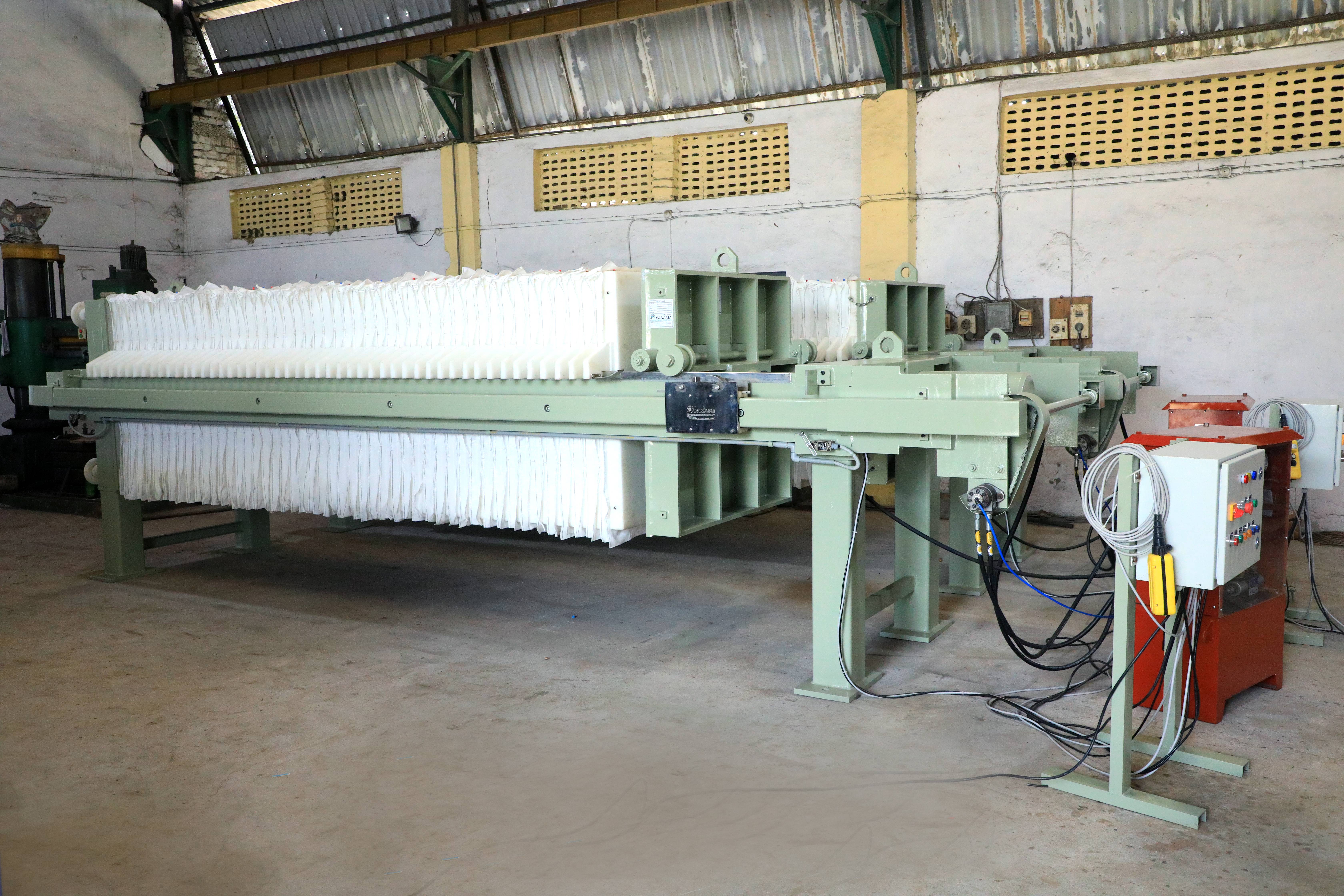
What Are the Range of Filter Press? Types, Capacities, Applications & Selection Guide
A filter press is an industrial solid-liquid separation system designed to separate suspended solids from liquids using pressure filtration. Filter presses are available in a wide range of configurations, sizes, plate designs, operating mechanisms, and automation levels to meet the filtration requirements of different industries.
So, what are the range of filter press systems available for industrial applications? The range typically includes manual filter presses, hydraulic filter presses, semi-automatic filter presses, fully automatic filter presses, chamber filter presses, plate-and-frame filter presses, and membrane filter presses. Each type can be configured according to filtration capacity, slurry characteristics, desired cake moisture, operating pressure, available space, and automation requirements.
Filter presses are commonly used in wastewater treatment, chemical processing, mining, ceramics, marble and stone processing, pigments, dyes, pharmaceuticals, food processing, metal finishing, and many other industries.
This guide explains the range of filter press systems, how the different types work, their applications, important specifications, and how to select the right filter press for your industrial process.
What Is a Filter Press?
A filter press is a pressure filtration machine used primarily for solid-liquid separation and sludge dewatering.
The machine contains multiple filter plates installed in a strong structural frame. Filter cloth covers the filtration surfaces of these plates.
When the plates are pressed together, chambers are created between them. Slurry is pumped into these chambers under pressure.
The liquid portion of the slurry passes through the filter cloth and exits the system as filtrate, while suspended solids remain inside the chambers.
As filtration continues, the solids accumulate and form a compressed mass known as filter cake.
After the filtration cycle is completed, the press is opened and the filter cake is discharged.
Although the fundamental filtration principle is similar, different filter press designs are available to accommodate different industrial requirements.
What Are the Range of Filter Press Systems?
The range of filter press equipment can be categorized according to plate design, closing mechanism, automation level, filtration technology, and capacity.
The most common types include:
- Manual filter press
- Hydraulic filter press
- Semi-automatic filter press
- Automatic filter press
- Chamber filter press
- Plate and frame filter press
- Membrane filter press
Understanding the differences between these systems can help businesses choose equipment that matches their filtration objectives.
1. Manual Filter Press
A manual filter press is one of the simplest filter press configurations.
In this type of system, certain operations such as closing, plate movement, or cake discharge may require manual intervention.
Manual filter presses can be suitable for:
- Small-scale industrial operations
- Laboratories
- Pilot plants
- Low-volume filtration
- Occasional filtration requirements
- Businesses looking for relatively simple equipment
One advantage of a manual filter press is its straightforward operating concept. With fewer automated components, the equipment can also be easier to understand and maintain in appropriate applications.
However, manual systems require greater operator involvement, particularly when frequent filtration cycles are necessary.
For facilities with higher production requirements, semi-automatic or automatic filter presses may provide a more appropriate solution.
If you are uncertain whether a manual or automated system suits your operation, you can contact Panama Engineering to discuss your filtration requirements.
2. Hydraulic Filter Press
A hydraulic filter press uses a hydraulic closing mechanism to apply and maintain pressure on the filter plate pack.
Before filtration begins, the hydraulic cylinder pushes the movable head toward the plate pack, securing the plates together.
Once the plates are properly closed, slurry can be pumped into the chambers.
Hydraulic filter presses are widely used because the hydraulic closing system can provide consistent closing force for industrial filtration.
They may be used in applications such as:
- Wastewater treatment
- Chemical processing
- Ceramics
- Mining
- Pigment production
- Metal processing
- Stone processing
- Industrial sludge dewatering
Hydraulic filter presses can also form the foundation of semi-automatic and fully automatic systems depending on the additional features incorporated into the equipment.
3. Semi-Automatic Filter Press
A semi-automatic filter press combines automated functions with some manual operations.
This configuration can provide a balance between equipment investment and operational efficiency.
For example, the hydraulic closing system may operate automatically while other stages still require operator involvement.
Semi-automatic filter presses may be appropriate for medium-scale industrial facilities where filtration occurs regularly but complete automation is not essential.
Potential advantages include:
- Reduced manual effort
- Improved operational consistency
- Greater productivity compared with basic manual systems
- Flexible configuration
- Lower automation complexity than some fully automatic systems
The exact automation functions vary depending on the machine design.
4. Automatic Filter Press
An automatic filter press is designed to reduce operator involvement throughout the filtration process.
Depending on system configuration, automation can be applied to functions such as:
- Hydraulic closing
- Slurry feeding
- Plate opening
- Plate shifting
- Cake discharge
- Filter cloth washing
- Process monitoring
- Cycle control
Automatic filter presses are particularly useful in industrial facilities where multiple filtration cycles are required every day.
Reducing manual intervention can help improve consistency and productivity while allowing operators to focus on process monitoring and other tasks.
Automatic filter presses may be considered for larger wastewater treatment plants, chemical facilities, mineral-processing operations, ceramic plants, and other high-volume applications.
5. Chamber Filter Press
The chamber filter press, also known as a recessed chamber filter press, is one of the most commonly used filter press designs.
Its filter plates contain recessed surfaces. When two plates are compressed together, the recessed areas form a filtration chamber.
Slurry enters these chambers, and solids gradually accumulate to create filter cakes.
Chamber filter presses are commonly used for:
- Industrial wastewater
- Effluent treatment
- Chemical sludge
- Ceramic slurry
- Mineral slurry
- Pigments and dyes
- Marble and granite sludge
- Textile wastewater
- Metal-processing sludge
The chamber design provides an effective combination of filtration area and cake-holding capacity.
Different plate sizes and chamber depths can be selected depending on the required filtration capacity.
6. Plate and Frame Filter Press
A plate and frame filter press uses alternating plates and frames.
The frames create spaces where solids accumulate, while the plates provide drainage surfaces for the filtered liquid.
Filter cloth is placed between the plates and frames to perform the actual filtration.
Plate and frame filter presses have traditionally been used in many industrial filtration processes.
Potential applications include:
- Chemical processing
- Food processing
- Pharmaceutical processes
- Oils
- Beverages
- Specialty industrial filtration
The suitability of a plate-and-frame design depends on the characteristics of the product and filtration requirements.
Modern industrial applications often use recessed chamber designs, but plate-and-frame systems continue to have relevant uses in specific processes.
7. Membrane Filter Press
A membrane filter press provides an additional dewatering stage after the initial filtration process.
Instead of relying only on feed pressure, membrane plates can expand and apply additional pressure to the filter cake.
After the chambers fill with solids, the membranes are pressurized. This squeezing action can force additional liquid from the cake.
Potential advantages include:
- Lower residual cake moisture
- Additional dewatering
- More consistent cake formation
- Potential reduction in filtration cycle time
- Improved liquid recovery in suitable applications
Membrane filter presses can be valuable where reducing cake moisture is particularly important.
Applications can include chemicals, mining, minerals, pigments, wastewater sludge, ceramics, and other industrial processes.
For help determining whether a chamber or membrane configuration is appropriate, businesses can speak with a filter press specialist about their slurry characteristics and production requirements.
Filter Press Range by Size and Capacity
Filter presses are not available in only one standard size.
Industrial filter presses can be manufactured with different plate dimensions, numbers of plates, filtration areas, chamber volumes, and processing capacities.
A smaller filter press might be appropriate for pilot operations, laboratories, or low-volume industrial filtration.
Larger systems are designed for facilities processing considerably greater quantities of slurry.
The appropriate size depends on factors such as:
- Slurry volume per day
- Solids concentration
- Filtration cycle time
- Required cake volume
- Filtration area
- Number of operating hours
- Required production capacity
Simply selecting the largest filter press is not necessarily the best approach.
A properly sized system should match the actual process conditions and expected production requirements.
Filter Press Range by Plate Size
Filter plate dimensions are another important way of categorizing the range of filter press machines.
Larger plates generally provide greater filtration area per plate, while smaller plates can be suitable for lower-capacity requirements.
The number of plates can also influence total filtration area and cake-holding capacity.
When determining the correct plate configuration, manufacturers and process engineers typically consider the amount of solids generated during each filtration cycle.
Filter Press Range by Filter Plate Material
Filter plates can be manufactured from different materials according to the application.
Polypropylene is commonly used because it can offer useful chemical resistance and durability for many industrial processes.
However, plate material selection should always consider:
- Slurry chemistry
- Operating temperature
- Pressure
- pH
- Mechanical requirements
- Chemical compatibility
Choosing suitable materials helps improve equipment reliability and service life.
Filter Press Range by Filter Cloth
The filter cloth is one of the most important components in any filter press.
Different filter cloth materials, weaves, and permeability levels are available for different filtration requirements.
The appropriate cloth depends on:
- Particle size
- Slurry characteristics
- Required filtrate clarity
- Cake-release properties
- Temperature
- Chemical compatibility
- Filtration speed
Even a properly sized filter press may perform poorly if the wrong filter cloth is installed.
Filter cloth selection should therefore be considered an essential part of filter press design rather than a minor accessory decision.
Filter Press Range by Automation Level
Another useful way to understand the range of filter presses is by the amount of automation they provide.
Basic Manual Systems
Suitable where production is limited and operator involvement is acceptable.
Semi-Automatic Systems
Provide automation for selected operations while retaining manual control over others.
Fully Automatic Systems
Designed for higher-throughput applications where reducing manual intervention and improving cycle consistency are priorities.
Choosing between these levels should depend on production frequency, labor availability, budget, safety requirements, and desired operating efficiency.
Filter Press Range for Wastewater Treatment
One of the largest application areas for filter press technology is industrial wastewater treatment.
During wastewater treatment, contaminants are often converted into or collected as sludge.
Because untreated sludge can contain a high percentage of water, transporting and disposing of it directly may be inefficient.
A filter press removes water from the sludge and produces a more concentrated cake.
Filter presses can therefore be incorporated into:
- Effluent Treatment Plants
- Industrial wastewater treatment plants
- Chemical treatment systems
- Sludge dewatering systems
- Process-water treatment facilities
The required filter press size depends on the quantity and characteristics of sludge generated.
Industries That Use Different Filter Press Ranges
Because filter presses can be customized, they are used across a broad range of industries.
Chemical Industry
Filter presses can separate chemical solids from liquids, recover products, and dewater process sludge.
Mining and Minerals
Mining operations use pressure filtration for mineral concentrates, tailings, and process-water recovery.
Ceramic Industry
Ceramic manufacturers use filter presses to remove water from clay and ceramic slurries.
Marble and Granite Industry
Stone-cutting operations can use filter presses to dewater sludge containing fine marble or granite particles.
Textile Industry
Filter presses are used to dewater sludge generated by textile wastewater-treatment processes.
Pigments and Dyes
Pressure filtration can help separate pigments, dyes, and other solid products from processing liquids.
Food Processing
Appropriately designed filter presses may be used in certain food-processing applications requiring solid-liquid separation.
Pharmaceutical Industry
Specialized filtration configurations can support certain pharmaceutical and related manufacturing processes.
Metal Finishing
Filter presses can dewater sludge generated from electroplating and other metal-treatment wastewater processes.
How to Select the Right Filter Press Range
Choosing the correct filter press requires more than deciding between a manual and automatic model.
Businesses should evaluate several important process variables.
1. Slurry Characteristics
Understand what material will enter the filter press.
Evaluate particle size, viscosity, solids concentration, pH, temperature, and chemical composition.
2. Processing Capacity
Calculate how much slurry must be processed during each hour, shift, or day.
3. Required Cake Moisture
Determine how dry the final filter cake needs to be.
Applications requiring additional dewatering may benefit from membrane filtration.
4. Filtrate Quality
Consider how clear the recovered liquid needs to be and whether it will undergo additional treatment or reuse.
5. Filter Cloth Selection
Choose filtration media according to particle size, chemical compatibility, and desired filtration performance.
6. Automation Requirements
Consider how frequently the equipment will operate and how much operator involvement is practical.
7. Available Space
Filter presses require sufficient space for operation, maintenance, plate movement, and cake discharge.
8. Future Capacity
Where production is expected to increase, future filtration requirements should also be considered during equipment selection.
If you need assistance evaluating these parameters, you can discuss your filter press requirements with Panama Engineering before choosing a system.
Manual vs. Automatic Filter Press: Which Is Better?
Neither system is automatically better for every application.
A manual filter press may provide an economical and practical solution for smaller operations with relatively few filtration cycles.
An automatic filter press may be better suited to larger facilities requiring frequent cycles and reduced operator involvement.
The decision should therefore be based on production volume, filtration frequency, labor requirements, process complexity, and budget.
Chamber vs. Membrane Filter Press
Another common selection decision is choosing between chamber and membrane filtration.
A chamber filter press relies primarily on feed pressure to fill the chambers and form filter cakes.
A membrane filter press adds a squeezing stage to remove additional liquid after initial cake formation.
If standard cake moisture is acceptable, a chamber filter press may provide an effective solution.
If additional cake dewatering is important, a membrane filter press may offer advantages.
Testing the actual slurry can provide useful information when making this decision.
Why Choosing the Correct Filter Press Matters
Incorrect filter press sizing or configuration can result in inefficient filtration, excessive cycle times, poor cake formation, high cake moisture, unnecessary operator involvement, or increased operating costs.
The right filter press should provide a practical balance between:
- Filtration capacity
- Cake quality
- Filtrate clarity
- Cycle time
- Automation
- Energy use
- Maintenance
- Equipment investment
For this reason, businesses should evaluate their actual slurry and process requirements before purchasing filtration equipment.
Frequently Asked Questions About the Range of Filter Press
What types of filter presses are available?
Common types include manual, hydraulic, semi-automatic, automatic, recessed chamber, plate-and-frame, and membrane filter presses.
Which filter press is best for wastewater treatment?
The appropriate filter press depends on sludge characteristics, daily sludge volume, solids concentration, desired cake moisture, available operating time, and automation requirements.
What is the difference between manual and automatic filter presses?
Manual filter presses require more operator involvement, while automatic systems automate selected stages such as closing, plate shifting, cake discharge, or cloth washing depending on their configuration.
What is a membrane filter press?
A membrane filter press uses expandable membrane plates to apply additional pressure to the filter cake after initial filtration, helping remove additional liquid.
Are filter presses available in different sizes?
Yes. Filter presses can be configured with different plate dimensions, numbers of plates, filtration areas, and chamber volumes to accommodate different processing capacities.
Can filter presses be customized?
Many filter press systems can be configured according to slurry properties, capacity, filtration requirements, materials, filter cloth, automation, and application.
Conclusion
So, what are the range of filter press systems?
The filter press range extends from manual and hydraulic filter presses to semi-automatic, fully automatic, chamber, plate-and-frame, and membrane filter press systems. Equipment can also vary significantly in plate size, filtration area, chamber volume, filter cloth, operating pressure, materials, and automation level.
This wide range makes filter press technology suitable for wastewater treatment, chemical processing, ceramics, mining, minerals, marble and granite processing, textiles, pigments, dyes, pharmaceuticals, food processing, metal finishing, and numerous other industrial applications.
The best filter press is not necessarily the biggest or most automated machine. It is the system that matches the slurry characteristics, required capacity, desired cake moisture, filtrate quality, operating conditions, and production goals of the specific application.
Selecting the correct filter press can help improve solid-liquid separation, reduce sludge volume, recover process water, simplify material handling, and improve overall filtration efficiency.
If you are planning to install a new filter press, replace existing equipment, increase filtration capacity, or determine which configuration is most suitable for your application, contact Panama Engineering for assistance with selecting an appropriate filter press solution.
Compare Filter Press Configurations
The suitable configuration depends on the process, level of automation and filtration objective. Compare hydraulic filter presses, automatic filter presses and membrane filter presses before requesting a technical recommendation.
Explore Filter Press Solutions
Continue your research with our filter press machines, filter press plates and technical enquiry pages.
Send Your Requirement