
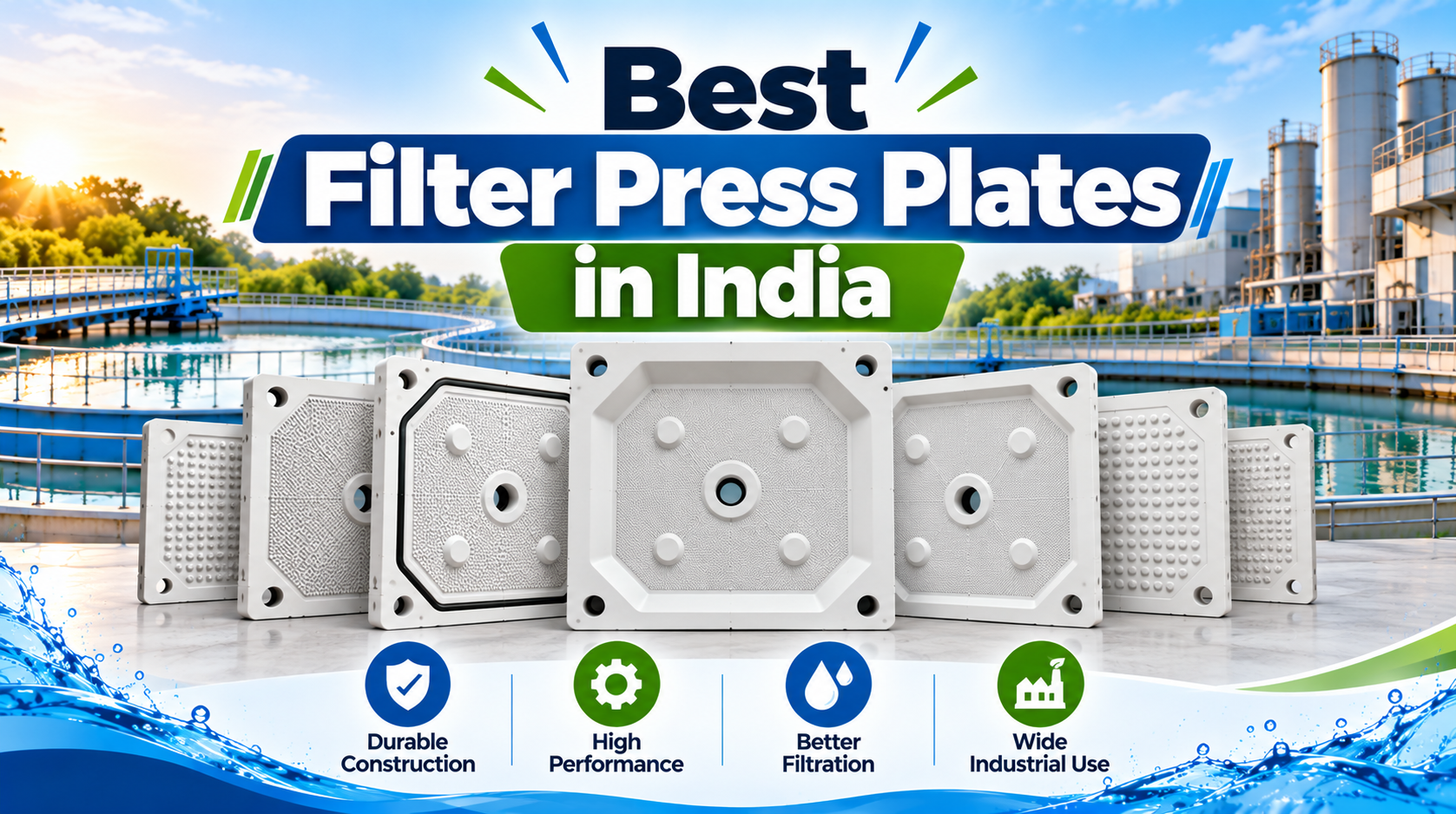
Best Filter Press Plates in India: Types, Features, Benefits & Complete Industrial Buying Guide
Industrial filtration plays a crucial role in maintaining production efficiency, reducing operational costs, and improving the quality of filtered liquids across various industries. Whether you operate a chemical processing plant, pharmaceutical manufacturing facility, wastewater treatment plant, or mining operation, selecting the best filter press plates in India can make a significant difference in your filtration performance.
Filter press plates are essential components of a filter press system. They support the filter cloth, create filtration chambers, separate solids from liquids, and help form filter cakes during the filtration process.
However, not every filter press plate is suitable for every industrial application.
Different industries require different plate designs, materials, operating pressures, and filtration characteristics. Choosing an unsuitable plate can result in inefficient filtration, frequent maintenance, excessive moisture in filter cakes, and unnecessary operating expenses.
In this comprehensive guide, we will explore the types of filter press plates available in India, their features, industrial applications, advantages, and important factors to consider before purchasing.
If you are searching for reliable industrial filtration solutions, understanding these differences will help you make a more informed purchasing decision.
What Are Filter Press Plates?
Filter press plates are specially designed components used in industrial filter press machines to separate solid particles from liquids.
These plates are installed in a series inside the filter press. When the plates are compressed together, they create chambers where slurry is pumped under pressure.
During filtration, liquid passes through the filter cloth and drainage channels, while solid particles remain inside the chambers and gradually form a filter cake.
Once the filtration cycle is complete, the plates are separated to discharge the accumulated solids.
How Do Filter Press Plates Work?
The filtration process generally involves five important stages:
- Plate Closing: Filter press plates are compressed together to create sealed filtration chambers.
- Slurry Feeding: A slurry containing solids and liquids is pumped into the chambers.
- Solid-Liquid Separation: Liquid passes through the filter cloth while solid particles are retained.
- Filter Cake Formation: Retained solids accumulate inside the chambers to form filter cakes.
- Cake Discharge: The plates open, allowing the filter cakes to be removed.
The design, material, and condition of the filter press plates directly influence filtration efficiency, cycle time, cake formation, and overall equipment performance.
Types of Filter Press Plates Available in India
India's industrial filtration market offers several types of filter press plates designed for different applications.
Understanding their differences is essential when selecting the most suitable filtration equipment.
1. Membrane Filter Press Plates
Membrane filter press plates are advanced filtration components designed to improve solid-liquid separation through an additional mechanical squeezing process.
These plates incorporate flexible membranes that can expand using a suitable pressure medium after the initial filtration stage.
The membrane expansion compresses the filter cake and helps remove additional liquid.
Key Features:
- Flexible membrane design for secondary cake compression.
- Improved filter cake dewatering in suitable applications.
- Potential reduction in residual cake moisture.
- May shorten overall processing cycles depending on slurry characteristics.
- Suitable for demanding industrial filtration requirements.
- Available in different sizes and material configurations.
Industrial Applications:
- Chemical manufacturing
- Pharmaceutical processing
- Mining and mineral processing
- Industrial wastewater treatment
- Food processing
- Specialty chemical production
Why Choose Membrane Filter Press Plates?
Membrane filter press plates are particularly useful when reducing filter cake moisture is an important operational requirement.
They can help industries improve dewatering performance and potentially reduce downstream drying, transportation, or disposal costs.
For a detailed comparison, read Membrane Filter Plate vs Chamber Filter Plate.
2. Chamber Filter Press Plates
Chamber filter press plates, commonly called recessed chamber filter plates, are widely used in conventional industrial filtration systems.
These plates feature recessed surfaces that form filtration chambers when two adjacent plates are pressed together.
Slurry enters the chambers, and liquid passes through the filter cloth while solids accumulate to form filter cakes.
Key Features:
- Simple and robust construction.
- Suitable for a wide range of industrial slurries.
- Reliable solid-liquid separation.
- Relatively straightforward maintenance.
- Available in multiple sizes and configurations.
- Often economical for standard filtration applications.
Industrial Applications:
- Municipal wastewater treatment
- Chemical processing
- Textile manufacturing
- Ceramic manufacturing
- Mining operations
- Industrial sludge dewatering
Why Choose Chamber Filter Press Plates?
Chamber filter press plates are a practical option for industries seeking dependable filtration without the additional complexity of membrane squeezing systems.
They are particularly suitable when conventional pressure filtration can achieve the required cake dryness and filtration throughput.
3. Polypropylene Filter Press Plates
Polypropylene filter press plates, also known as PP filter press plates, are manufactured using polypropylene-based materials.
Polypropylene is commonly selected because of its chemical resistance, relatively low weight, and suitability for many industrial filtration environments.
However, material compatibility must always be verified against the actual process chemicals, temperatures, and operating pressures.
Key Features:
- Good chemical resistance across many industrial applications.
- Lightweight compared with many metal plate designs.
- Resistance to corrosion from compatible process fluids.
- Available in recessed chamber and other configurations.
- Suitable for a variety of industrial filtration processes.
- Can offer long service life under appropriate operating conditions.
Industrial Applications:
- Chemical manufacturing
- Pharmaceutical industries
- Effluent treatment plants
- Food and beverage processing
- Dye and pigment manufacturing
- General industrial filtration
Why Choose Polypropylene Filter Press Plates?
PP filter press plates are often preferred where corrosion resistance and manageable plate weight are important.
Their suitability depends on the specific polypropylene grade, plate construction, and process conditions.
4. Plate and Frame Filter Press Plates
Plate and frame filtration systems use alternating plates and frames to create chambers for solid-liquid separation.
Filter cloths are positioned between the plates and frames, allowing liquids to pass while retaining solids.
These systems remain relevant in selected industrial applications where their particular configuration is beneficial.
Key Features:
- Traditional filtration design.
- Flexible chamber arrangements in compatible systems.
- Suitable for selected batch filtration processes.
- Can support different filter media configurations.
- Useful for applications requiring specific filtration arrangements.
Industrial Applications:
- Specialty chemical processing
- Laboratory and pilot filtration
- Certain pharmaceutical processes
- Food processing
- Selected fine chemical applications
The choice between plate and frame, recessed chamber, and membrane systems depends on process requirements rather than a universal ranking of performance.
Membrane vs Chamber vs Polypropylene Filter Press Plates
The following comparison helps industrial buyers understand important differences.
Feature
Membrane Plates
Chamber Plates
PP Plates
Primary distinction
Squeezing mechanism
Recessed chamber design
Plate material
Filtration method
Pressure filtration plus optional squeeze
Conventional pressure filtration
Depends on plate design
Cake moisture
Often lower with suitable squeezing
Depends on feed and cycle
Depends on configuration
Maintenance
Membrane system requires additional care
Generally simpler
Depends on construction
Typical applications
High-performance dewatering
General industrial filtration
Chemically compatible processes
Investment
Often higher
Often more economical
Varies by design and grade
Important: Polypropylene describes a material, while membrane and chamber describe plate designs. A membrane plate or chamber plate may itself be made from polypropylene.
Therefore, these categories are not mutually exclusive.
Key Features of the Best Filter Press Plates in India
When evaluating industrial filter press plates, buyers should focus on engineering suitability rather than appearance or price alone.
1. High Mechanical Strength
Filter press plates must withstand the pressure loads generated during filtration.
Appropriate plate construction helps prevent deformation, cracking, and premature equipment failure.
The manufacturer's rated operating pressure should always match the intended process.
2. Chemical Compatibility
Industrial filtration may involve acidic, alkaline, or chemically aggressive slurries.
The plate material must be compatible with the process fluid and cleaning chemicals.
A material compatibility assessment is particularly important for chemical and pharmaceutical applications.
3. Effective Drainage Design
Proper drainage channels allow filtrate to flow efficiently from the filter chambers.
An appropriate drainage design can help reduce unnecessary resistance and support consistent filtration performance.
4. Accurate Plate Dimensions
Filter press plates must match the dimensions and mechanical arrangement of the existing equipment.
Important specifications include:
- Plate length and width
- Plate thickness
- Chamber depth
- Feed port position
- Filtrate outlet configuration
- Handle and support arrangement
- Gasket or sealing requirements
Even small dimensional differences can affect installation, sealing, and operation.
5. Durable Construction
High-quality filter press plates should be designed to withstand repeated filtration cycles under their specified operating conditions.
Durability depends on the material, manufacturing process, mechanical loading, maintenance, and chemical exposure.
6. Easy Maintenance and Cleaning
Plates with suitable surface finishes and accessible drainage paths can simplify maintenance.
Regular cleaning and inspection help prevent blocked drainage channels, sealing problems, and filtration inefficiencies.
Industrial Applications of Filter Press Plates in India
Filter press plates support solid-liquid separation across numerous industries.
Chemical Industry
Chemical manufacturing facilities use filter press systems to separate solid particles from process liquids, recover valuable materials, and manage industrial residues.
Chemical compatibility and filtration performance are especially important when selecting plates for these applications.
Pharmaceutical Industry
Pharmaceutical processing may require carefully controlled filtration equipment and compatible construction materials.
Filter press plates used in pharmaceutical applications must meet relevant process, cleaning, and contamination-control requirements.
Wastewater Treatment Plants
Effluent treatment plants and sewage treatment plants use filter presses to dewater sludge.
Properly selected plates can support sludge volume reduction and help improve downstream handling.
Mining and Mineral Processing
Mining operations generate mineral slurries that often require efficient dewatering.
Heavy-duty filtration equipment and suitable plate configurations are important for handling abrasive solids and demanding operating conditions.
Food and Beverage Processing
Selected food-processing applications use pressure filtration to separate solids from liquids.
Material compatibility, hygienic design, and relevant food-contact requirements must be considered when choosing filtration components.
Textile and Dye Manufacturing
Textile industries use filtration equipment for wastewater management and selected manufacturing processes.
Chemical resistance and dependable filtration performance are important considerations.
How to Choose the Best Filter Press Plates in India
Selecting the right filter press plate requires evaluating several technical and commercial factors.
Step 1: Identify Your Filtration Requirements
Start by understanding the material being filtered.
Consider:
- Type of slurry
- Solid particle characteristics
- Solids concentration
- Slurry viscosity
- Required filtration capacity
- Target filter cake moisture
- Desired filtration cycle time
These details help determine the appropriate plate design.
Step 2: Select the Appropriate Plate Type
Choose the plate configuration based on your operating requirements.
For example, a membrane plate may be suitable when additional cake dewatering is required.
A recessed chamber plate may be more appropriate for conventional filtration applications.
Step 3: Check Material Compatibility
Confirm that the plate material can safely handle the process chemicals and operating temperatures.
Do not assume that every polypropylene plate is suitable for every chemical environment.
Step 4: Verify Operating Pressure
Check the maximum permissible operating pressure specified by the manufacturer.
For membrane systems, also verify the permitted membrane squeeze pressure.
Filtration pressure and membrane squeeze pressure are separate engineering parameters and should not be treated as interchangeable.
Step 5: Confirm Equipment Compatibility
If purchasing replacement filter press plates, provide the supplier with accurate equipment specifications.
Useful information includes the filter press model, plate dimensions, feed arrangement, outlet locations, and existing plate photographs or drawings.
Step 6: Evaluate Total Operating Cost
The cheapest plate is not necessarily the most economical option over its service life.
Consider purchase price alongside:
- Expected service life
- Maintenance requirements
- Replacement frequency
- Filtration cycle efficiency
- Downtime costs
- Energy consumption
- Cake handling and disposal costs
A technically suitable plate may provide better long-term value than a lower-priced alternative.
Step 7: Choose a Reliable Supplier
Look for a supplier capable of providing technical specifications, compatible plate configurations, installation guidance, and dependable after-sales support.
For more information about industrial filtration equipment, explore industrial filtration solutions from Filter Press Panama.
Benefits of Using High-Quality Filter Press Plates
Investing in suitable, high-quality filter press plates can provide several operational advantages.
Improved Filtration Efficiency
Correctly designed filter press plates support consistent solid-liquid separation and effective filtrate drainage.
This can help maintain filtration performance and reduce avoidable process interruptions.
Reduced Maintenance Requirements
Durable plates operated within their rated limits may require fewer replacements and repairs.
Routine inspections, proper cleaning, and correct operating procedures remain essential.
Better Filter Cake Formation
Appropriate chamber dimensions, filtration pressure, and filter cloth selection contribute to uniform filter cake formation.
In applications requiring additional dewatering, membrane squeezing can improve cake dryness.
Lower Long-Term Operating Costs
Efficient filtration may reduce operational costs through improved processing capacity, reduced downtime, and more effective sludge handling.
Actual savings depend on the slurry characteristics, equipment configuration, and operating practices.
Improved Equipment Reliability
Using plates that match the filter press design helps maintain proper sealing, alignment, and mechanical performance.
Filter Press Plate Price in India: What Determines the Cost?
The price of filter press plates in India varies depending on technical specifications, materials, and manufacturing requirements.
There is no single standard price applicable to every industrial filter press plate.
Several factors influence the final quotation.
Pricing Factor
Impact on Cost
Plate type
Membrane designs generally involve additional components
Plate dimensions
Larger plates often require more material
Material grade
Specialized materials may increase cost
Operating pressure rating
Higher-duty designs may require more robust construction
Chamber configuration
Custom configurations can affect manufacturing costs
Order quantity
Bulk orders may offer different unit pricing
Customization
Special feed ports and drainage arrangements may increase cost
Transportation
Delivery location and shipment weight affect total expense
When requesting a quotation, provide complete technical details rather than comparing prices based only on plate dimensions.
A reliable supplier should help identify a suitable plate configuration before finalizing the purchase.
Common Mistakes to Avoid When Buying Filter Press Plates
Industrial buyers sometimes focus primarily on price without evaluating technical compatibility.
This can lead to performance problems and unnecessary replacement expenses.
Common mistakes include:
- Choosing plates without checking the manufacturer's pressure rating.
- Ignoring chemical and temperature compatibility.
- Purchasing replacement plates with incorrect dimensions.
- Selecting membrane plates without evaluating actual dewatering requirements.
- Overlooking filter cloth compatibility.
- Comparing quotations without reviewing material and construction specifications.
- Ignoring installation, maintenance, and after-sales support.
Avoiding these mistakes can improve equipment reliability and purchasing decisions.
For additional guidance on plate design and selection, read our article on membrane and recessed filter press selection and explore the relevant filtration resources.
Why Choose Filter Press Panama for Industrial Filtration Solutions?
Choosing the right filtration equipment requires a clear understanding of operating conditions, production requirements, and long-term maintenance considerations.
Filter Press Panama provides a starting point for businesses exploring industrial filtration solutions and information about filter press equipment.
When evaluating filter press plates, industrial buyers should prioritize:
- Compatibility with existing filter press machinery.
- Appropriate plate materials and chamber configurations.
- Suitable operating pressure and temperature ratings.
- Efficient filtrate drainage and cake formation.
- Technical guidance for industrial filtration requirements.
- Long-term reliability and maintenance considerations.
Whether your application involves chemical processing, wastewater treatment, mineral processing, or industrial sludge dewatering, the right filter press plate selection begins with accurate process specifications.
Before purchasing, confirm product availability, technical specifications, and compatibility directly with the supplier.
People Also Ask: Best Filter Press Plates in India
Which filter press plate is best for industrial filtration?
The best filter press plate depends on the slurry characteristics, operating pressure, chemical compatibility, and required cake moisture. Membrane plates are often suitable for enhanced dewatering, while recessed chamber plates are widely used for conventional industrial filtration.
Which material is best for filter press plates?
Polypropylene is a commonly used material because of its chemical resistance and relatively lightweight construction. However, the best material depends on process temperature, pressure, chemical exposure, and mechanical requirements.
What is the difference between membrane and chamber filter press plates?
Membrane filter press plates include flexible membranes that compress the filter cake after initial filtration. Conventional chamber filter press plates rely primarily on slurry feed pressure for filtration and cake formation.
How long do filter press plates last?
Filter press plate service life varies with operating pressure, chemical exposure, slurry abrasiveness, maintenance, and plate construction. Proper operation and regular inspection can help extend service life.
Can filter press plates be replaced individually?
Individual plates may be replaceable if compatible components are available and the filter press manufacturer's requirements are satisfied. Plate dimensions, sealing surfaces, feed arrangements, and mechanical compatibility must be verified.
Frequently Asked Questions
1. What are the best filter press plates in India?
The best filter press plates in India are those that meet the specific requirements of the filtration process. Membrane, recessed chamber, and polypropylene filter press plates are common options, with suitability depending on pressure, chemical compatibility, filtration capacity, and cake dryness requirements.
2. What are membrane filter press plates used for?
Membrane filter press plates are used in industrial applications requiring additional filter cake dewatering. They are commonly considered for chemical processing, mining, wastewater treatment, and other operations where lower residual cake moisture is beneficial.
3. Are polypropylene filter press plates durable?
Yes, properly manufactured polypropylene filter press plates can provide durable performance under compatible operating conditions. Their service life depends on material grade, chemical exposure, operating temperature, pressure, and maintenance.
4. What is the difference between PP and membrane filter press plates?
PP refers to polypropylene, a material used to manufacture filter press plates. Membrane refers to a plate design that incorporates a flexible squeezing mechanism. A membrane filter press plate may also be manufactured using polypropylene components.
5. What is the price of filter press plates in India?
Filter press plate prices in India depend on plate type, dimensions, material grade, pressure rating, chamber design, order quantity, and customization requirements. Buyers should request a technical quotation for accurate pricing.
6. Which industries use filter press plates?
Filter press plates are used in chemical manufacturing, pharmaceuticals, wastewater treatment, mining, textile processing, food processing, ceramics, and other industries requiring solid-liquid separation.
7. How do I select the right filter press plate manufacturer in India?
Choose a manufacturer or supplier that provides appropriate technical specifications, compatible plate designs, material information, pressure ratings, and after-sales support. Verify product quality and suitability before purchasing.
8. Are membrane filter press plates better than chamber plates?
Membrane filter press plates can provide improved cake dewatering in suitable applications, but they are not automatically better for every process. Conventional chamber plates may offer a simpler and more economical solution when additional squeezing is unnecessary.
9. Can filter press plates improve filtration efficiency?
Yes. Properly selected filter press plates can support effective filtrate drainage, reliable sealing, consistent cake formation, and stable filtration performance. Overall efficiency also depends on filter cloth selection, slurry properties, and operating conditions.
10. Where can I find information about industrial filter press plates in India?
Industrial buyers can explore technical information and filtration resources through Filter Press Panama and contact relevant equipment suppliers to confirm available plate designs, specifications, and pricing.
Conclusion: Choosing the Best Filter Press Plates in India
Selecting the best filter press plates in India is an important decision for industries that depend on reliable and efficient solid-liquid separation.
The right plate design can support consistent filtration performance, improved filter cake formation, reduced maintenance interruptions, and better long-term operating efficiency.
Membrane filter press plates are useful when additional cake dewatering is required. Recessed chamber filter press plates provide dependable performance for many conventional filtration applications. Polypropylene filter press plates offer material advantages in chemically compatible industrial environments.
However, the ideal choice depends on your specific slurry characteristics, filtration capacity, operating pressure, chemical compatibility, and equipment configuration.
Rather than choosing plates based solely on price, focus on technical suitability, construction quality, and total operating cost.
For more information about filter press equipment and industrial filtration solutions, visit Filter Press Panama and explore filtration options suited to your industrial requirements.
Explore Filter Press Solutions
Continue your research with our filter press machines, filter press plates and technical enquiry pages.
Send Your Requirement