
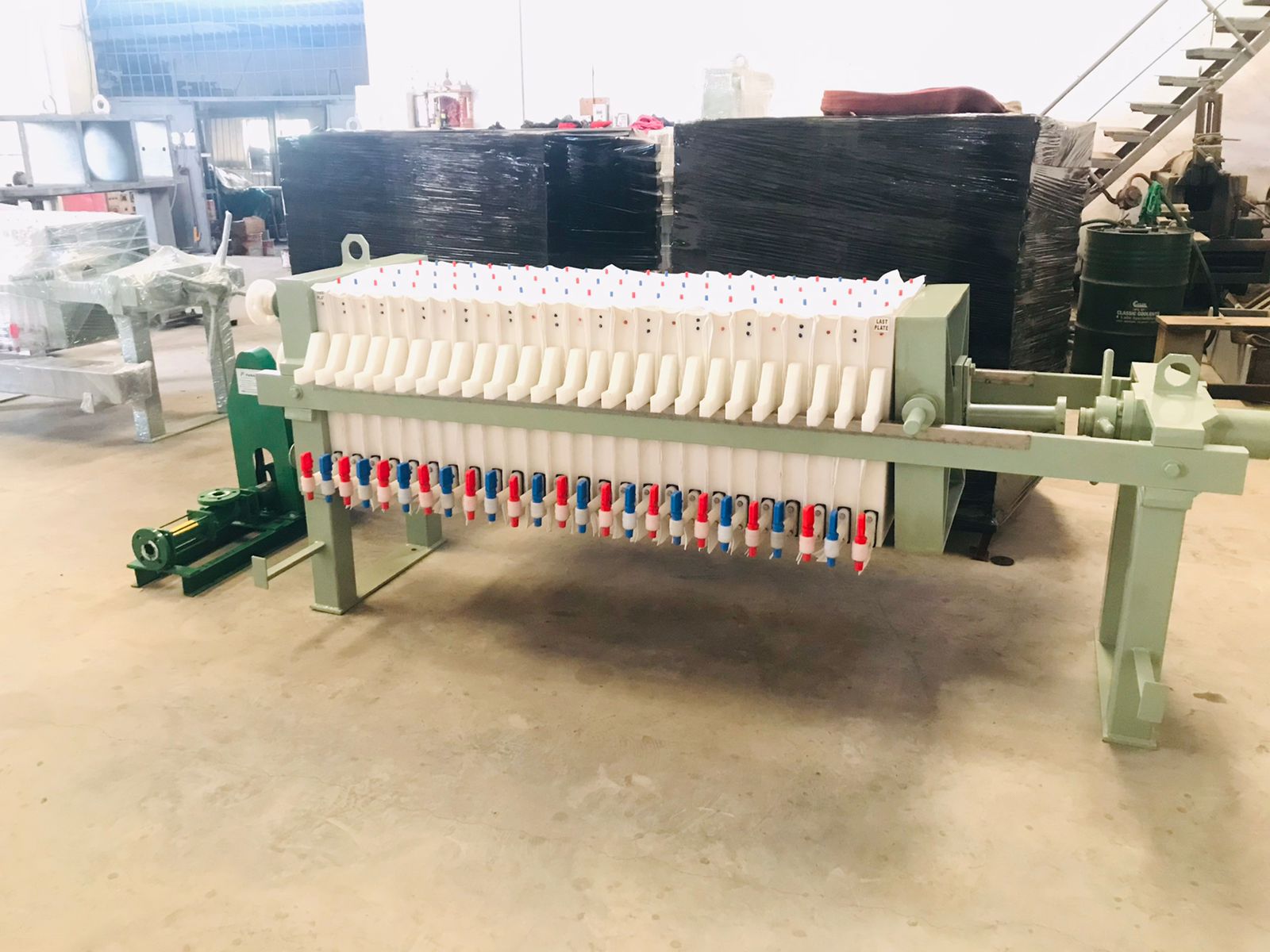
Applications of Filter Press: Industries, Uses, Benefits & Working Process
A filter press is one of the most widely used solid-liquid separation systems in industrial processing. From wastewater treatment and chemical manufacturing to mining, ceramics, pharmaceuticals, food processing, pigments, dyes, and metal finishing, the applications of filter press technology cover a broad range of industries where liquids need to be separated from suspended solids.
The basic purpose of a filter press is straightforward: a slurry containing solids and liquids is pumped into filter chambers under pressure. Filter cloth allows the liquid to pass through while retaining solid particles. The separated liquid is called the filtrate, while the accumulated solids form a filter cake.
Because filter presses can handle different slurry characteristics, capacities, operating pressures, and filtration requirements, they have become an important part of many industrial processes.
In this guide, we explore the major filter press applications, how filter presses are used across industries, their benefits, and the factors businesses should consider when selecting a filtration system.
What Is a Filter Press Used For?
A filter press is primarily used for solid-liquid separation and sludge dewatering. It converts a liquid-solid mixture into a relatively clear liquid stream and a concentrated solid cake.
Typical filter press uses include:
- Industrial wastewater treatment
- Sludge dewatering
- Process water recovery
- Chemical filtration
- Mineral processing
- Product recovery
- Effluent treatment
- Pigment and dye processing
- Ceramic slurry filtration
- Metal finishing wastewater treatment
- Food and beverage processing
- Pharmaceutical processing
The exact filtration result depends on the characteristics of the slurry, filter cloth, plate configuration, feed pressure, filtration time, and other operating parameters.
How Does a Filter Press Work in Industrial Applications?
Before examining individual applications of filter press systems, it is useful to understand their basic working process.
The filter press contains a series of filter plates covered with filter cloth. When these plates are compressed together, chambers are formed between them.
Slurry is pumped into these chambers under pressure. As pressure increases, the liquid passes through the filter cloth and drainage channels. Solid particles are retained inside the chambers.
Over time, the retained solids build up to create filter cakes.
When the filtration cycle is completed, slurry feeding stops, pressure is released, and the plates are opened. The filter cakes can then be discharged.
Depending on the application, additional operations such as cake washing, air blowing, membrane squeezing, or cloth washing may also be incorporated into the process.
This pressure-driven filtration method makes filter presses suitable for many industries requiring effective dewatering and solid-liquid separation.
Major Applications of Filter Press
Filter presses can be adapted to a wide variety of industrial processes. Here are some of the most common applications.
1. Filter Press in Wastewater Treatment
One of the most important filter press applications is wastewater treatment.
Industrial wastewater often contains suspended solids, chemicals, metals, organic matter, and other contaminants. During wastewater treatment, these materials can become concentrated into sludge.
Handling sludge with high water content can be inefficient because it occupies more space and increases transportation and disposal requirements.
A filter press can be used to remove a significant portion of the water from sludge.
The process produces a more concentrated filter cake and a separated liquid stream.
Filter presses may be incorporated into Effluent Treatment Plants (ETPs), industrial wastewater treatment systems, and other sludge management processes.
Industries generating large volumes of wastewater can potentially benefit from improved sludge handling and process-water management through appropriate filtration.
2. Filter Press in the Chemical Industry
The chemical industry involves numerous processes where solids must be separated from liquids.
A filter press can be used for:
- Chemical slurry filtration
- Product recovery
- Catalyst separation
- Wastewater treatment
- By-product separation
- Process clarification
- Sludge dewatering
Chemical applications require careful consideration of the materials used for filter plates, cloth, piping, pumps, and other components.
The pH, temperature, chemical composition, and corrosiveness of the slurry should be evaluated when designing a filter press system.
Selecting chemically compatible filtration equipment can help improve reliability and equipment life.
3. Filter Press in Mining and Mineral Processing
Mining and mineral-processing operations frequently generate large quantities of slurry.
These slurries may contain valuable minerals, fine particles, water, and processing chemicals.
A filter press can help separate water from mineral solids, producing a filter cake that is easier to handle than highly diluted slurry.
Applications can include:
- Mineral concentrate dewatering
- Tailings dewatering
- Process-water recovery
- Coal processing
- Metal ore processing
- Industrial mineral processing
Recovering water from slurry may also allow it to be returned to certain stages of the production process where technically appropriate.
Because mining applications can involve abrasive materials and demanding operating conditions, equipment configuration and component selection are particularly important.
4. Filter Press in Ceramic Manufacturing
The ceramic industry is another major user of filter press technology.
Ceramic production frequently involves mixing raw materials with water to form a slurry. Before further processing, excess water may need to be removed.
A filter press can separate water from the ceramic slurry and produce a filter cake with a more suitable consistency for subsequent manufacturing stages.
Filter presses can be used in the production of:
- Ceramic tiles
- Sanitaryware
- Tableware
- Porcelain
- Technical ceramics
- Other ceramic products
Consistent filtration can help manufacturers maintain more predictable material characteristics between production batches.
5. Filter Press in Marble and Stone Processing
Cutting, grinding, and polishing marble, granite, and other natural stones can consume substantial quantities of water.
The resulting wastewater contains fine stone particles.
Instead of treating this mixture solely as liquid waste, a filtration system can separate much of the suspended material from the water.
A filter press can transform stone-processing sludge into a more manageable filter cake while producing filtered water.
Where water quality and process requirements allow, recovered water may be reused within the facility.
This makes filter presses valuable equipment for marble factories, granite processors, stone-cutting facilities, and polishing operations.
6. Filter Press in the Food and Beverage Industry
Solid-liquid separation is an important operation in many food-processing applications.
Depending on process and hygiene requirements, filter press technology may be used for filtration, clarification, product recovery, or by-product management.
Potential applications include certain processes involving:
- Sugar
- Edible oils
- Beverages
- Food ingredients
- Starch
- Syrups
- Processing residues
Food-related filtration requires appropriate equipment materials and filtration media for the specific application and applicable regulatory or sanitary requirements.
The process should always be designed according to the characteristics of the food product being handled.
7. Filter Press in the Pharmaceutical Industry
Pharmaceutical and related processing environments may require controlled solid-liquid separation.
Filter presses can be configured for certain applications involving:
- Product separation
- Intermediate processing
- Solid recovery
- Process filtration
- Waste treatment
Because pharmaceutical manufacturing can involve strict cleanliness, contamination-control, and material-compatibility requirements, filtration equipment must be selected according to the specific process.
The filter cloth, contact materials, cleaning requirements, and equipment design are particularly important considerations.
8. Filter Press in Pigment and Dye Manufacturing
Pigments and dyes are used across paints, coatings, textiles, plastics, printing, and many other industries.
Their manufacturing processes often involve liquid-solid mixtures that require filtration.
A filter press can help separate pigment or dye particles from process liquids.
Depending on the process, the objective may be to recover the solids as the desired product or to remove unwanted solids from wastewater.
Important considerations can include:
- Particle size
- Filtration rate
- Cake washing
- Filtrate clarity
- Product recovery
- Filter cloth selection
Proper filtration can contribute to more consistent processing and efficient material handling.
9. Filter Press in Textile Wastewater Treatment
Textile manufacturing uses water in processes such as washing, dyeing, printing, and finishing.
Wastewater from these operations may contain dyes, chemicals, suspended solids, and other process residues.
After chemical or biological wastewater treatment, sludge often remains.
A filter press can be used to dewater textile sludge, reducing its liquid content and creating a more concentrated cake.
The resulting cake can then be handled according to applicable waste-management requirements.
This makes filter presses an important part of many textile effluent-treatment systems.
10. Filter Press in Metal Finishing and Electroplating
Metal finishing and electroplating operations can generate wastewater containing suspended solids and metal-containing sludge.
After appropriate wastewater treatment, a filter press may be used to separate the resulting solids from the liquid.
Potential applications include wastewater generated by:
- Electroplating
- Surface treatment
- Metal cleaning
- Galvanizing
- Metal finishing
- Manufacturing operations
Because some sludge can contain hazardous or regulated materials, handling and disposal must follow applicable environmental and safety requirements.
Filter press dewatering can help reduce the amount of liquid associated with the sludge before downstream management.
11. Filter Press in Paper and Pulp Industry
Paper and pulp manufacturing can generate wastewater and sludge containing fibers, fillers, and other suspended materials.
Filter presses may be used to dewater sludge and separate solids from process liquids.
Potential benefits include reducing sludge volume, simplifying material handling, and supporting water-management processes.
The appropriate filter press configuration depends on the characteristics and quantity of sludge generated by the facility.
12. Filter Press in Paint and Coating Manufacturing
Paint, ink, and coating manufacturing processes can generate pigment-rich slurries and wastewater requiring filtration.
A filter press can assist in separating suspended particles from process liquids.
Depending on the operation, filtration may be used for product processing, raw-material recovery, or waste treatment.
Filter cloth and equipment materials must be selected based on the chemical composition and characteristics of the slurry.
Benefits of Filter Press Applications
The widespread use of filter presses across industries is due to several potential advantages.
Efficient Solid-Liquid Separation
Pressure filtration provides an effective method of separating suspended solids from liquids.
Sludge Volume Reduction
Removing water from sludge can substantially reduce the amount of material that must be stored, transported, treated, or disposed of.
Filter Cake Formation
Instead of handling a highly diluted liquid slurry, operators can work with a concentrated filter cake.
This generally simplifies downstream material handling.
Water Recovery
Depending on filtrate quality and process requirements, separated water may potentially be reused in industrial operations.
Flexible Industrial Applications
Filter presses can be configured for many different slurry types and production requirements.
Different plate sizes, filter cloths, materials, automation levels, and operating configurations can be selected.
Improved Waste Management
Dewatering can help reduce the volume and weight of industrial sludge before transportation or disposal.
Product and Material Recovery
In some applications, the solid material retained by the filter press is not waste—it may be a valuable product or reusable material.
Filter presses can therefore also play an important role in product recovery.
Chamber Filter Press Applications
A chamber filter press uses recessed filter plates that form chambers when pressed together.
These chambers collect solids during filtration.
Chamber filter presses are widely used for:
- Wastewater sludge
- Chemicals
- Ceramics
- Mining
- Pigments
- Stone-processing sludge
- Industrial effluent
They are commonly selected where reliable batch filtration and cake formation are required.
Membrane Filter Press Applications
A membrane filter press adds a squeezing stage after the initial filtration process.
Membrane plates expand to apply additional pressure to the filter cake, helping remove additional liquid.
Membrane filter presses may be considered when the process requires:
- Lower cake moisture
- Additional dewatering
- Improved cake consistency
- Potentially shorter filtration cycles
- Enhanced process efficiency
Whether a membrane system provides meaningful benefits depends on the slurry and operating requirements.
How to Choose a Filter Press for Your Application
Selecting the right filter press requires an understanding of both the equipment and the material being processed.
Important factors include:
Type of Slurry
The chemical and physical properties of the slurry affect equipment selection.
Solid Concentration
The percentage of suspended solids can influence filtration capacity and cake formation.
Particle Size
Fine and coarse particles can behave differently during filtration and may require different filter cloth characteristics.
Required Capacity
The volume of slurry that must be processed during each shift or day determines the required filtration capacity.
Cake Moisture
Some applications require a relatively dry filter cake, while others are less sensitive to residual moisture.
Filtrate Quality
The required clarity of the separated liquid should also be considered.
Operating Temperature and pH
Equipment materials should be compatible with the process conditions.
Level of Automation
Filter presses can range from manual systems to highly automated filtration equipment.
Facilities processing frequent batches may benefit from greater automation, while smaller operations may find simpler configurations more appropriate.
Filter Press Applications and Sustainable Water Management
Water management has become increasingly important for industrial operations.
Many manufacturing processes consume significant quantities of water while simultaneously generating wastewater.
Filter press technology can contribute to better water-management practices by separating suspended solids from process water and wastewater.
Where the recovered filtrate meets the necessary quality requirements, it may potentially be reused in appropriate operations.
At the same time, dewatering reduces the amount of water contained in sludge.
This combination can support efforts to improve resource efficiency and reduce waste volumes.
However, a filter press should be considered as part of an overall treatment process rather than as a universal standalone wastewater solution.
Frequently Asked Questions About Filter Press Applications
What is the main application of a filter press?
The primary application of a filter press is solid-liquid separation. It is particularly common in industrial wastewater treatment and sludge dewatering.
Which industries use filter presses?
Filter presses are used in wastewater treatment, chemicals, mining, ceramics, marble and stone processing, textiles, pigments, dyes, metal finishing, pharmaceuticals, food processing, paper manufacturing, and other industries.
Can a filter press be used for wastewater?
Yes. Wastewater treatment is one of the most common applications of filter press technology. A filter press is typically used to dewater sludge generated during the treatment process.
Can filtered water from a filter press be reused?
Potentially, yes. Whether filtrate can be reused depends on its quality and the requirements of the intended application. Additional treatment may be required.
What happens to solids in a filter press?
Suspended solids are retained by the filter cloth and accumulate inside the chambers. They eventually form a compressed material known as filter cake.
What type of filter press should I choose?
The appropriate filter press depends on slurry composition, solids concentration, particle size, required capacity, desired cake moisture, filtrate quality, chemical compatibility, and automation requirements.
Conclusion
The applications of filter press technology extend across almost every industry where effective solid-liquid separation, sludge dewatering, product recovery, or wastewater treatment is required.
From industrial wastewater treatment, chemicals, mining, ceramics, marble and granite processing to textiles, pharmaceuticals, pigments, dyes, food processing, metal finishing, paints, and paper manufacturing, filter presses provide a versatile solution for separating liquids from suspended solids.
The technology can help convert difficult-to-handle slurry into a concentrated filter cake while recovering a separated liquid stream. Depending on the process, this can improve sludge handling, reduce waste volume, support water recovery, and improve overall process efficiency.
However, successful filtration depends on selecting equipment that matches the actual application. Slurry characteristics, solids concentration, particle size, required throughput, operating pressure, chemical compatibility, cake moisture, filter cloth, and automation level should all be carefully considered.
Every industrial filtration application is different. Proper evaluation of the process before selecting equipment can help ensure that the filter press delivers reliable and efficient performance.
If your business needs help selecting a filter press for wastewater treatment, sludge dewatering, chemical processing, ceramics, mining, stone processing, or another industrial application, contact Panama Engineering to discuss your filtration requirements and find a suitable solution.
Choosing a Filter Press for Your Application
Different applications can require different press configurations, plate types and operating approaches. Explore our filter press range and areas of application, then contact Panama Engineering with your filtration requirement.
Explore Filter Press Solutions
Continue your research with our filter press machines, filter press plates and technical enquiry pages.
Send Your Requirement